
Blog
Sizing Chart for Stud Earrings: MM-by-Placement Guide
Key takeaways:
- When it comes to millimetres (mm), it simply describes the diameter of the stud you see from the front view. This is the most accurate way to judge its visual footprint and how much space it will cover on your ear.
- While the measurement is fixed, the look is subjective. Factors like the ear anatomy and how the stone is proportioned can change how the stud appears, making no two ears look the same.
- Every placement invites you to play with scale, but following a safe range gives you the confidence to build your look over time.
- From delicate 1.0mm accents to more prominent 6.0mm studs, each size carries a different presence, whether it’s worn on the lobe or in cartilage.
- Comfort is shaped by fit, not size alone. How a stud is built—from post length to backing type—determines how it sits on the ear and makes all the difference.
Note: Stud sizes are often shown per piece, and fit can vary by placement and ear anatomy—so check whether measurements refer to a single stud or a pair, and confirm post length and backing style for comfort.
Introduction
When it comes to the art of the curated ear, size and placement are your most personal form of self-expression.
As each stud follows the natural curve of your ear, its brilliance unfolds with ease. The sparkle shifts subtly with your features and every movement.
In that quiet interplay of light and form, a signature comes into play—entirely your own.
What Does Millimetres (MM) Mean in Stud Earrings?
The millimetre (mm) simply measures the diameter of a stud when viewed from the front. It gives a clearer picture of scale and visual presence—whether it reads as a delicate whisper or a bold presence.
This metric becomes especially meaningful when placement comes into play, helping you anticipate how the piece sits on the ear to curate an intentional look.
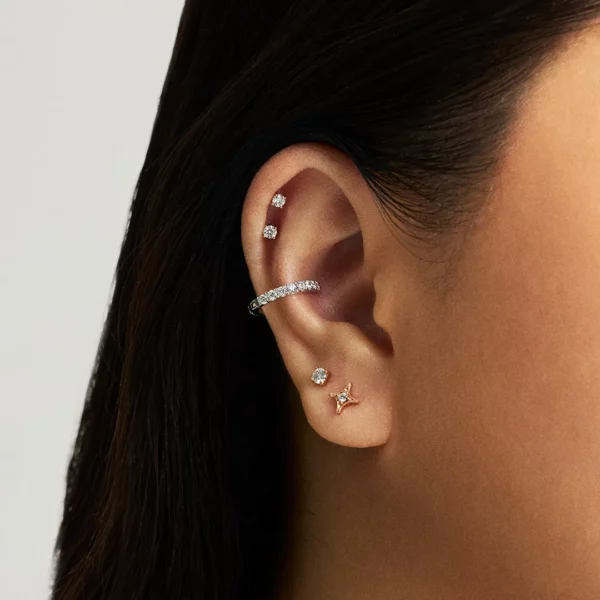
What Affects How a Stud Earring Size Looks on the Ear?
While a millimetre is a fixed measurement, its appearance is beautifully subjective. The same stud can appear entirely different from one ear to another, shaped by a few key elements such as:
- Earlobe Size and Shape: A size that feels softly balanced on a fuller lobe may read as a more defined, modern statement on a petite ear.
- Design Proportions: In multi-stone studs, the shape formed by the stones influences whether the piece feels subtle or more pronounced on the ear.
- Setting Style: Open prongs keep the look true-to-size, while a bezel setting adds a metal border that increases the visual footprint, making the stud look slightly wider.
- Metal Colour: White Gold melts into the sparkle for a seamless look, while Yellow or Rose Gold defines the edges, making the stud’s size and boundary more obvious.
Stud Earring Sizes for Every Ear Spot: The Visual Ear Map
When it comes to a curated ear, there are no strict rules to follow. Having a safe size range helps you build a look with confidence. Each stud is given its own space to shine, while still leaving room for personal expression.
Earlobe Piercing Placements

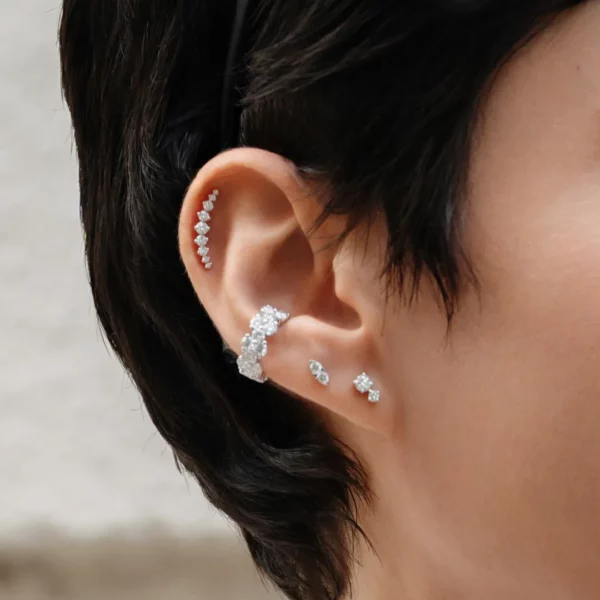
The earlobe is the most familiar canvas for studs — visible, versatile, and naturally balanced. Worn alone, a single stud carries presence. Layered with varying sizes, it creates a fluid rhythm that feels considered rather than styled.
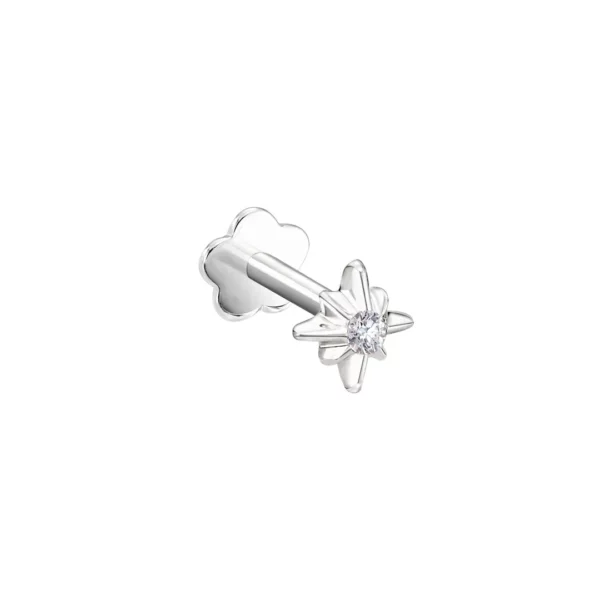
Primary Lobe

This is usually where the eye lands first. A stud worn here tends to set the mood for the rest of the ear. Sizes around 4.0mm – 6.5mm often feel naturally balanced in this spot, anchoring the look without ever feeling heavy.
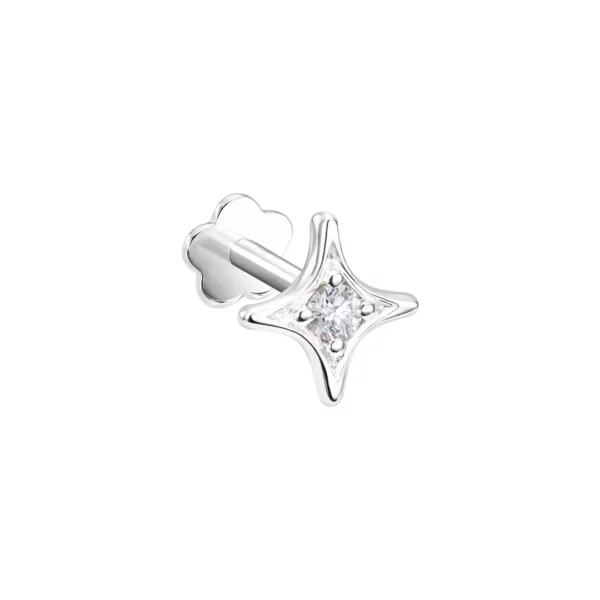
Secondary Lobe

The second lobe adds a sense of rhythm. Slightly smaller sizes — often around 3.0mm – 5.0mm — keep the eye moving comfortably between studs, creating a gentle transition from the piece below.
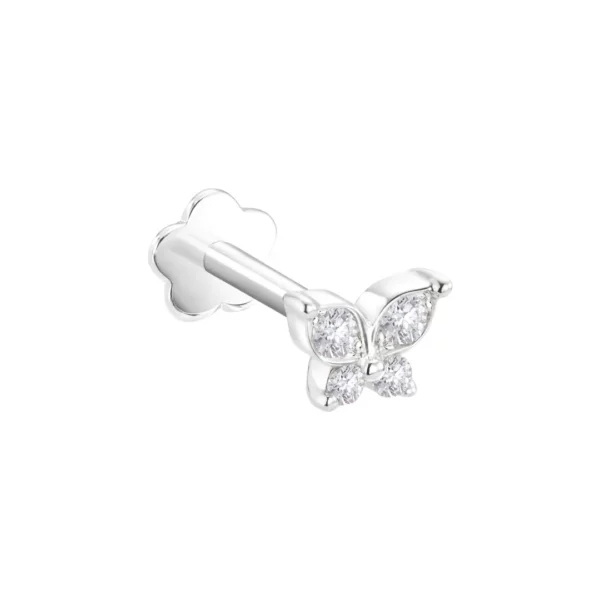
Tertiary Lobe

Higher up, when the ear begins to curve, the space naturally becomes more delicate. Smaller studs around 2.0mm – 4.0mm bring a soft glimmer that completes the look without asking for attention.
Placement | Recommended Range (mm) | Aesthetic Presence |
Primary Lobe | 4.0mm – 6.5mm | Confident and anchoring |
Secondary Lobe | 3.0mm – 5.0mm | Rhythmic and fluid |
Tertiary Lobe | 2.0mm – 4.0mm | Delicate and subtle |
Cartilage Piercing Placements — Stud Size Guide

Cartilage piercings bring a more sculptural quality to the ear. With firmer structure and less surface area, the proportion feels more intentional here. Subtle shifts in size are often more noticeable, giving each stud its own quiet presence.
Helix

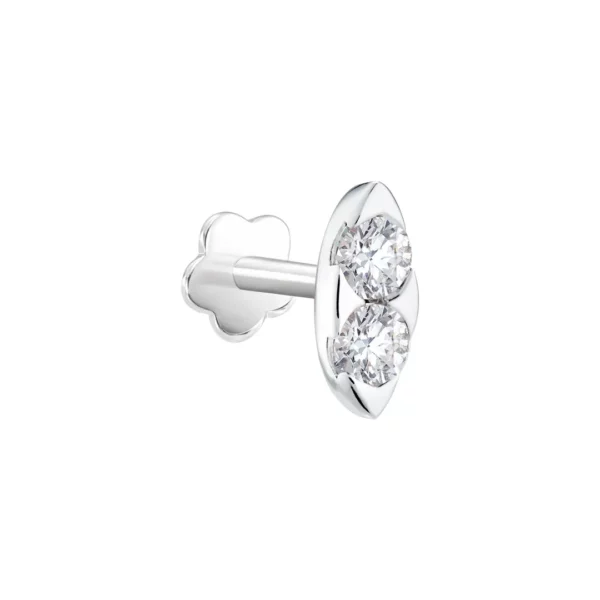
Along the outer rim or forward helix, studs tend to look best when they follow the ear’s natural silhouette. Sizes in the 2.0mm – 4.0mm range sit flush against the curve, feeling integrated rather than perched at the edge of the ear.
Tragus

Compact and close to the face, the tragus naturally draws attention. Studs in the 1.5mm – 3.0mm range tend to sit most comfortably here, reading as clean and intentional without overwhelming this small, highly visible space.
Conch

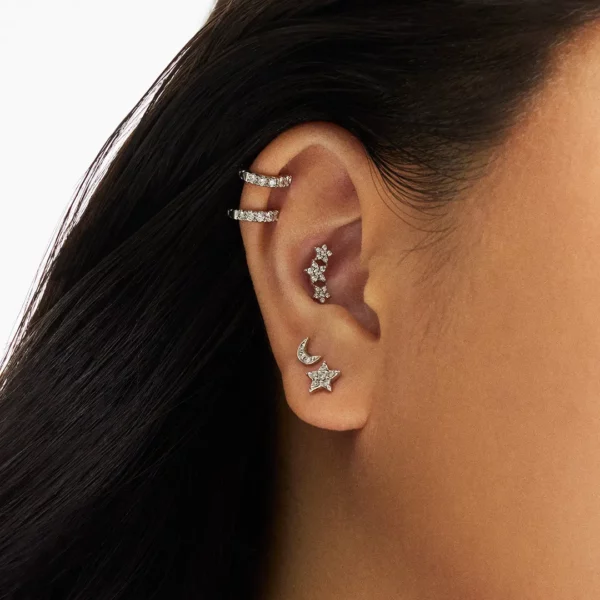
Since the conch sits in the deeper bowl of the ear, it’s the one cartilage spot where it’s safe to go a little larger. A 4.0mm – 6.5mm stud feels well-balanced here, nestling into the inner landscape of the ear.
Placement | Recommended Range (mm) | Aesthetic Presence |
Helix | 2.0mm – 4.0mm | Clean and integrated |
Tragus | 1.5mm – 3.0mm | Precise and intentional |
Conch | 4.0mm – 6.5mm | Balanced and nested |
Also Read:
Key Considerations for the Right Fit in Stud Earrings
There’s a quiet confidence in jewellery that fits perfectly — the kind you can wear all day, every day, without thinking about it. When a stud blends seamlessly into your routine, comfort becomes part of its beauty.
A few thoughtful details can make all the difference:
- Ear Anatomy: The surface of the ear isn’t flat — it has gentle curves and variations in thickness. When a stud sits on a slope rather than a natural resting point, it can press unevenly and start to pinch or dig in.
Choose a size that suits the flat surface of your ear to let the piece rest evenly. - Piercing Placement: Gravity affects how a stud hangs. If a piercing is set low or at an angle, larger studs, especially, will naturally pull forward and droop.
In these placements, lighter scales tend to sit more comfortably, while larger sizes feel more stable when worn through centred, well-supported holes. - Post Length: This is what keeps a stud flush against the skin. A post that is too long can tilt or snag as you move, while one that is too short can feel tight or pressed on the ear.
Aim for a snug fit that keeps the stud stable with a little bit of room for movement. - Backing Type: Sitting behind the ear, the backing holds the stud in place. It shapes how the stud feels against the skin and how securely the piece stays upright.
A flatback design is the most comfortable option as it sits flush against the skin, minimising pressure and friction.
See our Jewellery Wearing Guide to Threaded Flatback Studs.
Styling for Stud Earrings: Pick Your Look
- Micro and Minimal: Quiet, refined, and effortlessly modern, micro studs create a barely-there sparkle. Smaller sizes are the most fluid pieces, slipping easily into almost any placement on the ear. They’re the go-to for a clean, understated look.
- Everyday Elegance: This is the sweet spot, bridging subtle and bold. Mid-sized studs carry enough presence to stand alone or act as a visual anchor within a curated ear. It’s a look that feels polished and put-together, without feeling styled.
- Statement and Spotlight: For days when you want the ear to lead the look, larger studs naturally draw the eye with confidence. When paired with quieter accents elsewhere on the ear, they create a sense of balance rather than a crowded one.
At The Love Diamond, whether you choose a micro accent or a statement piece, the sparkle in our diamond stud earrings stays consistent across your entire curated ear.
FAQs
What is a good mm size for earring studs?
3.0mm to 4.0mm is the sweet spot for most. It carries enough presence on the ear while remaining light and easy to wear throughout the day.
Can I mix sizes in multiple ear piercings?
Absolutely. You can create a uniform look with matching sizes, a cascading effect from large to small, or even place a larger statement piece in a cartilage piercing for an unexpected focal point. Styling is entirely about your personal rhythm, but remember, comfort is key.
How do I choose a stud size that doesn't droop on my lobe?
Pay attention to the post length. If the post is too long for your ear thickness, the stud can tilt forward because there is extra space behind the lobe, allowing the weight to pull it down. Choosing a shorter, well-fitted post helps the earring sit closer to the ear, providing better support and allowing the stud to rest flat against your lobe.
Can I wear the same stud size in both my lobes and cartilage?
Yes, but the fit requirements change. While you can wear the same diameter, like 3.0mm in both, cartilage usually requires a shorter post length than a lobe to prevent the stud from sliding or snagging.
Which stud size is best for a stacked ear look?
There are no fixed rules, but variety creates interest. Instead of using the same size for every piercing, try mixing different scales. Pairing a larger piece with smaller 2.0mm accents gives each stud enough space to be noticed without the ear feeling crowded.
Final Thoughts: Let the Placement Lead the Size
While there is a safe range for everyday wear, the right scale is ultimately the one that mirrors your personal rhythm. When placement, proportion, and fit work together, size begins to make sense on its own.
Whether you’re curating a layered ear or refining a single everyday piece, letting the ear guide the scale creates a look that feels balanced, comfortable, and entirely personal.
A well-chosen stud doesn’t compete for attention; it simply settles into place and stays there.
Explore The Love Diamond’s Flatback Ear Studs, created to sit comfortably, wear beautifully, and feel effortless from day to night.